Write a product description that helps someone choose the right item: what it is, what it does, what is included, which option they need and what limitations matter. Use the language buyers recognize naturally. Repeating a search phrase is not a substitute for useful product information.
Rewrite to resolve buying uncertainty, not to evade a supposed penalty
If you own the text, repeating factual product information across Etsy and your website is not automatically a Google spam violation. The separate duplicate-description guide explains canonical selection and where a rewrite actually helps.
Keep specifications consistent while tailoring context. On an owned site, buyers may need brand background, compatibility, shipping detail, file delivery and a support route that Etsy previously supplied around the listing. Add those answers rather than replacing accurate words with synonyms.
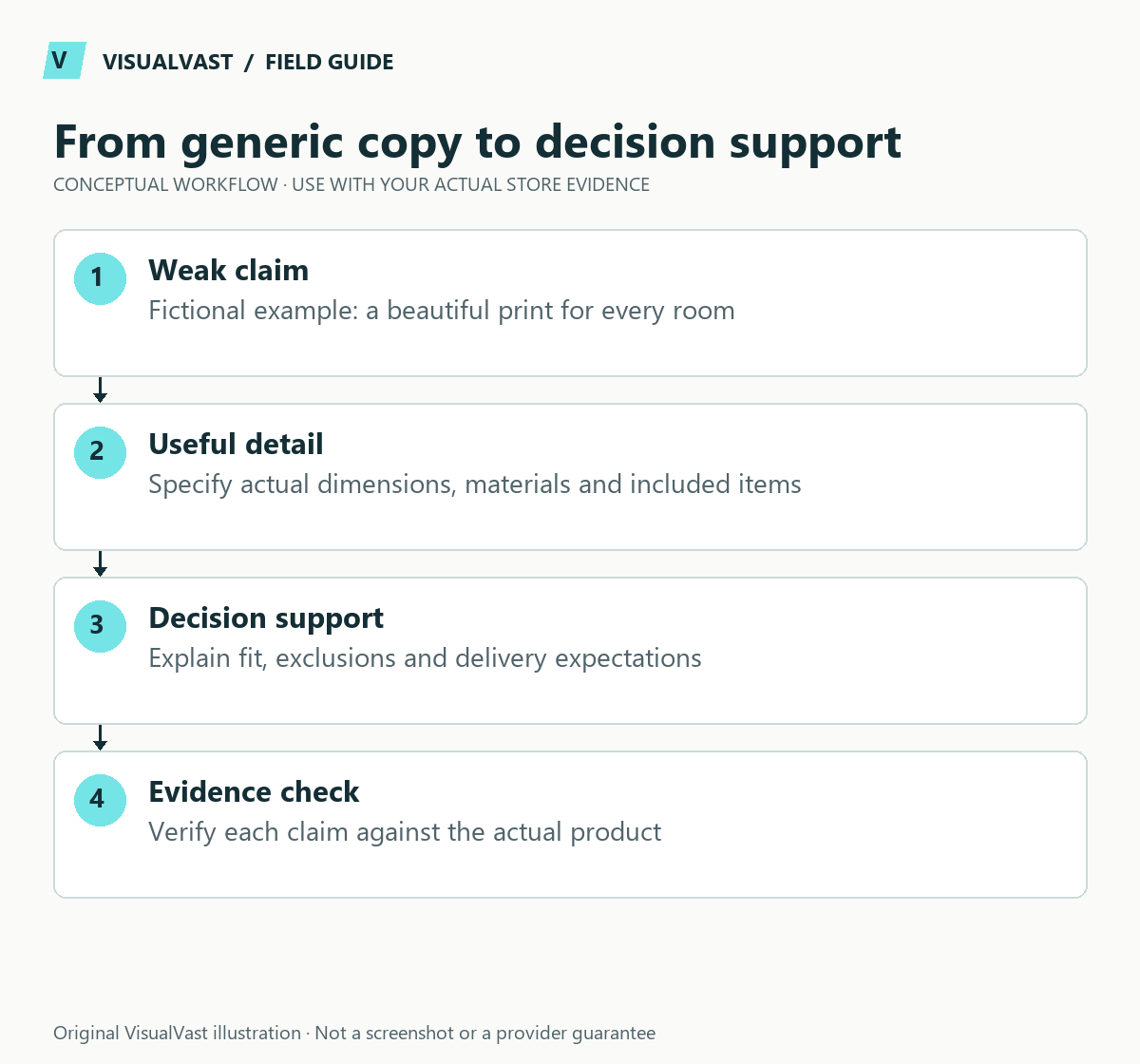
For a fictional wall print, replace a vague claim such as “perfect premium decor” with the actual sizes, material, frame inclusion and delivery format. Support quality claims with evidence you possess; do not invent certifications, customer reviews or performance results.
Before a product feed is activated, verify that price and availability agree across the selected variation, checkout and feed. Use the Merchant Center mismatch audit if those sources disagree.
Start with verified facts from the actual product, not a competitor’s page or a generic AI prompt. A good description should remain helpful even if the visitor arrives through a direct link rather than search.
Build a fact sheet before writing
Record dimensions, materials, formats, compatibility, variations, care or usage instructions, delivery details and any supported claims. Note the source for uncertain specifications. If a claim cannot be verified, remove it or qualify it accurately rather than making it sound more confident.
For POD, distinguish the product’s documented characteristics from your own sample observations. For digital products, distinguish the included files from the outcomes a buyer hopes to achieve. For physical products, include the details that affect fit, use and handling.
Use a practical description structure
Use this guide’s worksheet in the fillable workbook (PDF, page 19). Download and save a copy to retain your entries.
Use the store traffic & conversion diagnosis
| Section | Question it answers | Example of useful specificity |
|---|---|---|
| Opening | What is this and who is it for? | A weekly planning PDF for independent tutors |
| Included items | What do I receive? | Named files, pages or physical components |
| Selection | Which option should I choose? | Size, format or variant differences |
| Use | How does it fit my task? | A concrete workflow or demonstration |
| Limits | What should I know before buying? | Required software or excluded service |
The example is fictional. Apply the pattern to your actual offer without implying a result you cannot support.
Turn benefits into observable statements
“Keeps appointments and lesson notes on one sheet” is more concrete than “revolutionizes productivity.” A buyer can inspect the first claim in a preview. The second is difficult to assess and invites expectations the product may not meet.
Use evidence where it helps: clear photographs, a readable sample, documented material specifications or an honest demonstration. Do not invent customer reviews, test results or before-and-after figures. If an image is a mockup, make its illustrative role clear.
Place search language where it belongs
Use a descriptive product name, one main heading, an opening explanation and relevant subheadings. Describe images for their content and purpose. Write a concise search description that matches the page rather than promising information the page does not contain.
Google’s people-first content guidance emphasizes useful, reliable content for an intended audience. Our editorial application is to answer the buying questions thoroughly and remove language that exists only to repeat keywords.
Keep product data consistent
The title, variant selector, price, availability, visible description and structured data should refer to the same offer. Google’s product structured-data documentation explains how product information can support richer search appearances. Eligibility does not guarantee a particular display.
When a product changes, review more than the opening paragraph. Old size charts, image captions or delivery promises can survive a description update. Assign an owner for keeping specifications synchronized across the store and any other sales channels.
Edit for the customer’s next question
Read the page and ask what a cautious buyer would still need to know. Can they distinguish the available variants? Is a digital item clearly digital? Does the page explain whether a display prop is included? Is there a useful route to delivery and support information?
For a fictional notebook, “A5, dotted pages, lay-flat binding” is useful only if those facts are correct. Do not add specifications because they are common in similar products. The fact sheet protects both clarity and trust.
Common questions
How long should a product description be?
Long enough to support the decision and explain meaningful limitations. A simple item may need little text; a compatibility-dependent product may need a table and examples. There is no guaranteed ranking word count.
Can I use the same copy for every color?
Shared facts can be shared. Explain genuine differences where they exist, and avoid generating nearly identical pages solely for keyword variations.
Use the digital product page checklist for downloadable offers or SEO & Traffic Foundations to connect product copy with site structure and measurement.